Skip to content
  • Home
  • Pricing
  • Support
  • Download
  • My account
auto rigger
  • Home
  • Pricing
  • Support
    • Documentation
    • Tutorials
    • Create A Ticket
    • Contact Us
    • Changelog
  • Download
MY ACCOUNT
auto rigger

Setup Arise

6
  • Introduction
  • System Requirements
  • Create Account / Login
  • Installation
  • License Activation Instructions
  • Troubleshooting

Getting Started Tutorial

8
  • Interfaces (UI)
  • How To Prepare The Model For Rigging?
  • What Are Nodes, Attachments, and Presets?
  • What Are Guides?
  • What is The Attribute Editor?
  • Let’s Start Rigging
  • How To Export Rigs?
  • Digging Deeper

Elements

29
  • Node
  • Attachment
  • Presets
  • Attribute Editor And Attributes Types
  • Workspace
  • Outliner
  • Guides
  • Connections
  • Loading/Saving
  • Placeholders
  • Dump_grp
  • Skinning Joints
  • Poses
  • Group Node
  • Rig Base Node
  • Helper Tools
  • Preferences
  • Scene Settings
  • Log Viewer
  • Model Validation Checks
  • Model Updater
  • AI Auto Guides Placement
  • Rig Mocap Tester
  • Rig Export
  • Batch Menu
  • Sticky Note
  • API Commands
  • Custom Ctrls Shapes
  • Ctrl Shapes Lookup

How To Create Your Own Node

6
  • The Basics On How To Create Your Own Node
  • Creating Attributes
  • Creating Guides
  • IoJoint
  • IoTransform
  • Example Node Module

How To Create Your Own Attachment

1
  • Creating Custom Attachments in Arise

Basic Nodes

8
  • Base Node
  • One Joint
  • FK Chain
  • IK Chain
  • Two Joints IK
  • Dynamic FK Chain
  • Eye
  • Path

CA Nodes

12
  • CA_Spine
  • CA Head
  • CA Leg
  • CA Arm
  • CA Fingers
  • CA_Mouth
  • CA Eye
  • CA Quadruped Back Leg
  • CA Quadruped Front Leg
  • CA Ribbon
  • CA Tentacle
  • CA Wing

Attachments

22
  • SpaceSwitch
  • CtrlsShape
  • CtrlsSettings
  • MakeDynamic
  • FollowSkeleton
  • PostScript
  • MovablePivot
  • HelperJoints
  • Rename
  • AttributesSettings
  • CustomDriver
  • CustomDriven
  • ManualConnections
  • AddJoints
  • AddGroupAbove
  • JointsSettings
  • Parent
  • AddAttribute
  • ConnnectAttribute
  • HumanIK
  • CtrlsLockHideAttributes
  • CtrlsLimitAttributes

Mechanical

2
  • Vehicle Body
  • Wheel
View Categories
  • Home
  • Arise Docs
  • Elements
  • Guides

Guides

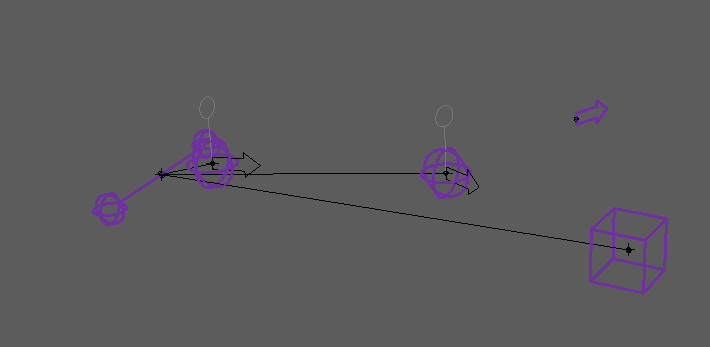
Guides are Maya objects created by nodes when switching to ‘Template’ mode.
They provide crucial position and orientation information necessary for rig creation.
They typically appear purple and are organized in a parent-child hierarchy.
DO NOT delete, change the hierarchy, or modify a guide, except for moving or rotating it.

Best Practices for Guide Manipulation:
When positioning guides, it’s advisable to enable Maya’s ‘xray‘, ‘xray joints‘, and ‘wireframe on shaded‘ options and/or disable ‘select surface objects‘ for better visibility.


(As of version 1.06.01), Arise includes a button to toggle the aforementioned Maya settings, making it easier to view and position guides. This button is located next to the ‘solo’ button. Right-click on the button for additional options regarding what gets toggled.

Solo Mode:

Activating ‘Solo’ mode changes the guides color to pink and detaches them from their parent-child relationship. This allows moving individual guides without affecting their children.

Mirror:
For symmetrical character models, guides positioned on one side can be mirrored onto the other side across the YZ plane (+X <–> -X).

Ways to mirror:

  • Mirror Selected (1st button from the left) – Mirror selected nodes. Changes are visible in ‘Template’ mode.
  • Mirror L to R (2nd button) – Mirror guides of nodes with the prefix ‘L_’ onto matching node with the prefix ‘R_’.
  • Mirror R to L (3rd button) – Mirror guides of nodes with the prefix ‘R_’ onto matching node with the prefix ‘L_’.
  • Mirror Node – Right-click on a node and select ‘Mirror Node‘.
  • Duplicate And Mirror Node – Right-click on a node and select ‘Duplicate And Mirror Node‘.
  • ‘Mirror onto <node name>’ – Appears when right-clicking on the node if there’s another node with a matching name but opposite prefix.

Reset Guides:
Guides’ positions and orientations can be reset through various methods:

  • ‘Edit‘ menu -> ‘Guides‘ -> ‘Reset Selected Nodes Guides‘
  • ‘Edit‘ menu -> ‘Guides‘ -> ‘Reset Selected Nodes Guides + Parent Guides‘
  • Right-click on a node in ‘Template’ mode, then select ‘Guides‘->’Reset Guides‘
  • Right-click on a node in ‘Template’ mode, then select ‘Guides‘->’Reset Guides + Parent Guide‘

Guides Preferences Settings:
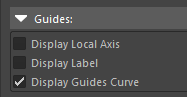
In ARISE’s ‘Settings‘ menu -> ‘Preferences’ window:

  • Display Local Axis:  Shows the guide’s local rotation axis.
  • Display Label:  Displays the guide’s name next to each guide.
  • Display Guides Curve:  Shows curves between guides and their parents.

To apply changes, switch to ‘Template’ mode again. Additionally, from Maya’s ChannelBox, you can toggle ‘Display Axis‘ and ‘Display Label‘ on individual guides.

The following types of guides are available:

Basic Guide:
A simple guide for positioning and orientation. While the default shape of the Basic Guide is a circle, it is often customized for improved visual clarity.

Aim Guide:
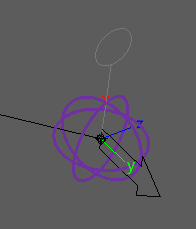
The Aim Guide is designed to consistently point towards another guide while allowing free positioning within the scene. Its default shape is a sphere with an arrow indicating its aim direction. 
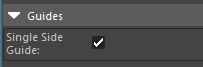
The Aim Guide features a companion component known as the ‘Side Guide,’ which influences the twist or ‘Up Vector’ of the aim. If the ‘Side Guide’ appears locked, it’s likely that control over the twist has been transferred to a parent guide. To regain control, untick the ‘Single Side Guide‘ attribute on the node. In some cases, rotational management may be entirely handled by other guides, such as with the ‘CA_Arm’ and ‘CA_Leg’ nodes.
Direction Guide:
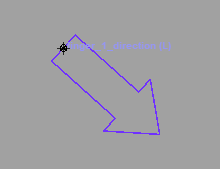
Direction Guides serve solely for orientational purposes; their positioning is irrelevant and cannot be adjusted.
Direction Guides default shape are typically represented by an arrow shape. Not affected by ‘Solo’ mode.
Pole Vector Guide:
A Pole Vector Guide can only move on a plane defined by three other guides and is primarily employed in ‘CA_Arm’ and ‘CA_Leg’ to position the pole vector control. Its default shape is typically represented by an arrow. Not affected by ‘Solo’ mode. 

Multi-Parents Guide: (New to version: 1.05.02)
The Multi-Parents Guide shares similarities with the Basic Guide but differs in that it has more than one parent influencing its default position, orientation, and/or scale. Not affected by ‘Solo’ mode. 

Parent Guide:
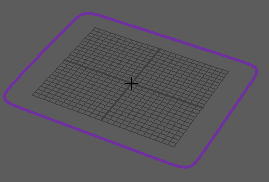
The Parent Guide serves as the primary guide for each node, positioned by default at the world origin. Its primary function is to move and scale the node’s other guides when not in ‘Solo’ mode.
When multiple nodes are in ‘Template’ mode, their parent guides will be stacked on top of each other.

_____________________________________________
Get Arise at: https://www.ariserigging.com

Updated on May 13, 2026

What are your Feelings

Share This Article :

  • Facebook
  • X
  • LinkedIn
  • Pinterest
OutlinerConnections
  • Home
  • Pricing
  • Support
  • My account
  • Privacy Policy
  • EULA

Copyright © 2026 - Arise Rigging System

This website uses cookies to ensure you get the best experience. By using this site, you agree to our use of cookies.
Accept
Manage consent

Privacy Overview

This website uses cookies to improve your experience while you navigate through the website. Out of these, the cookies that are categorized as necessary are stored on your browser as they are essential for the working of basic functionalities of the website. We also use third-party cookies that help us analyze and understand how you use this website. These cookies will be stored in your browser only with your consent. You also have the option to opt-out of these cookies. But opting out of some of these cookies may affect your browsing experience.
Necessary
Always Enabled
Necessary cookies are absolutely essential for the website to function properly. These cookies ensure basic functionalities and security features of the website, anonymously.
CookieDurationDescription
cookielawinfo-checkbox-analytics11 monthsThis cookie is set by GDPR Cookie Consent plugin. The cookie is used to store the user consent for the cookies in the category "Analytics".
cookielawinfo-checkbox-functional11 monthsThe cookie is set by GDPR cookie consent to record the user consent for the cookies in the category "Functional".
cookielawinfo-checkbox-necessary11 monthsThis cookie is set by GDPR Cookie Consent plugin. The cookies is used to store the user consent for the cookies in the category "Necessary".
cookielawinfo-checkbox-others11 monthsThis cookie is set by GDPR Cookie Consent plugin. The cookie is used to store the user consent for the cookies in the category "Other.
cookielawinfo-checkbox-performance11 monthsThis cookie is set by GDPR Cookie Consent plugin. The cookie is used to store the user consent for the cookies in the category "Performance".
viewed_cookie_policy11 monthsThe cookie is set by the GDPR Cookie Consent plugin and is used to store whether or not user has consented to the use of cookies. It does not store any personal data.
Functional
Functional cookies help to perform certain functionalities like sharing the content of the website on social media platforms, collect feedbacks, and other third-party features.
Performance
Performance cookies are used to understand and analyze the key performance indexes of the website which helps in delivering a better user experience for the visitors.
Analytics
Analytical cookies are used to understand how visitors interact with the website. These cookies help provide information on metrics the number of visitors, bounce rate, traffic source, etc.
Advertisement
Advertisement cookies are used to provide visitors with relevant ads and marketing campaigns. These cookies track visitors across websites and collect information to provide customized ads.
Others
Other uncategorized cookies are those that are being analyzed and have not been classified into a category as yet.
SAVE & ACCEPT